Dark Matter: The Mystique of Our Universe
Last Updated on March 8, 2026 by Hana Shimekit
In the early 1930s, Fritz Zwicky studied the Coma Cluster, using the 100-inch telescope at the Mount Wilson Observatory, and he measured the velocities of individual galaxies within the cluster. However, what he found surprised him greatly. He found that the Coma Cluster’s galaxies were moving far faster than could be explained by their observable mass alone by using the virial theorem, which establishes a relationship between a system’s average kinetic energy and average potential energy. He determined the total mass needed to maintain the cluster’s gravitational pull and contrasted it with the mass inferred from the galaxies’ visible light. He discovered that the recorded velocities could not be explained by the observable mass, suggesting that there must be some additional, unseen mass, naming it ” Dunkle Materie,” which is where the word dark matter originates from. Regardless of this hypothesis being discredited for 40 years, it was taken up, and scientists have made many more advancements in trying to understand this mysterious matter. How do we know that dark matter exists?
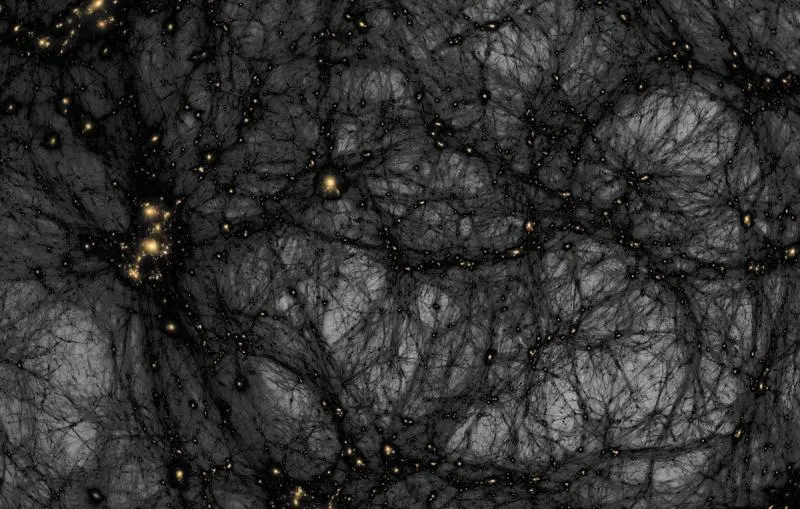
Dark matter is not directly observable, it doesn’t interact with matter or any electromagnetic force like typical matter. We can only observe it indirectly through its gravitational effects on visible matter, radiation, and the large-scale structure of the universe. Astronomers have measured the rotation curves of galaxies by observing the Doppler shift of light from stars and gas at different distances from the galactic centre and have repeatedly observed that the velocity remains constant or even increases with distance. This contradicts Newtonian mechanics, which expects the orbital velocity of stars to decrease with distance from the centre if only visible matter were present, implying the presence of an additional, unseen mass.
We also have gravitational lensing, which occurs when light from a distant object, such as a galaxy or quasar, passes near a massive object like a galaxy cluster. By analyzing the lensing patterns, astronomers map the mass distribution of the lensing object, revealing the presence of additional matter, which we have labelled as dark matter.
The cosmic background radiation (CMB) also provides information about the density and distribution of matter in the early universe. Observations by satellites like the Wilkinson Microwave Anisotropy Probe (WMAP) and the Planck satellite show that the density of ordinary matter alone cannot account for the observed fluctuations. If fluctuations in matter were not existent, CMB density fluctuations in baryon-photon plasma peaks would not be observed.
The presence of dark matter leads to the early formation of the first stars and galaxies, which reionize the universe. Large-scale changes in temperature variations are brought about by the additional Thomson scattering of CMB photons caused by this reionization. This results in a faint polarization signal. The absence of dark matter would cause reionization to happen considerably later, changing the CMB polarization and temperature fluctuations.
Let’s not forget about the Bullet Cluster, a pair of colliding galaxy clusters whose observation provides direct evidence for dark matter. In this system, the gas from the two clusters has collided and slowed down, but the galaxies, mostly unaffected by the collision, have passed through. Gravitational lensing shows that most of the mass is associated with the galaxies, not the gas, indicating that dark matter, which does not interact strongly with ordinary matter, has passed through unaffected and is responsible for the majority of the mass in the cluster. So clearly, dark matter is observable, even though it is not directly observable.
Technology has advanced to the point where we want to directly detect dark matter. We possess cryogenic detectors, which are cooled down to almost zero degrees Celsius. These detectors use the intense cold to reduce background noise and increase their sensitivity to minute energy deposits. Small amounts of energy are produced when a dark matter particle interacts with the target material of the detector. These interactions can take the form of electron-hole pairs or crystal lattice vibrations. Scientists intend to directly discover dark matter by enhancing and examining these signals. Since the majority of the particles being targeted are WIMPS, a class of heavier neutrinos, cryogenic detectors and liquid noble gas detectors are located in underground facilities to prevent the detection of other particles that could provide an inaccurate readout. Gran Sasso National Laboratory in Italy is one example of such a lab.
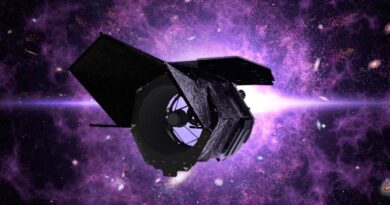
Additionally, telescopes like the Euclid and James Webb telescopes have been developed to not only study the universe but also to find dark matter. Several other observatories and telescopes, including the Nancy Grace Roman Telescope to be launched in 2027 and the ELT (Extremely Large Telescope), which is planned to be constructed in Chile, have also been established to investigate dark matter. The Hyper-Kamiokande Observatory, located in Japan, is also being constructed with the express purpose of studying neutrinos and perhaps detecting dark matter particles.
Not left behind by these enormous technical advances are quantum sensors. Superconducting Quantum Interference Devices, or SQUIDs, are perfect for detecting the faint signals that may result from axion-photon conversions because of their extreme sensitivity and ability to detect extremely weak magnetic fields. Axion is a hypothetical elementary particle that is postulated to be extremely light and interacts very weakly with other particles, making it difficult to detect. While primarily designed to detect gravitational waves from cosmic events like black hole mergers, the enhanced sensitivity of LIGO and Virgo detectors could indirectly contribute to dark matter research by detecting gravitational waves from primordial black holes.
Dark matter is no longer considered a hypothetical theory, as evidenced by our ability to indirectly detect it. Our only remaining task is to refine our methods for detecting it directly. Although it is not visible, there is a lot that has been discovered about it that makes it an intriguing phenomenon in physics. Perhaps something will emerge that clarifies the mystery of dark matter, or perhaps it will offer new information that fundamentally alters our comprehension of it.

- Cultural Perspective of the Moon in East Africa - January 8, 2026
- Reframing Cultural Astronomy in Africa - September 25, 2025
- Enigmatic Explosions Redefining Our Understanding of Cosmic Phenomena - October 14, 2024