Artemis II: Historic Crewed Trip Around the Moon
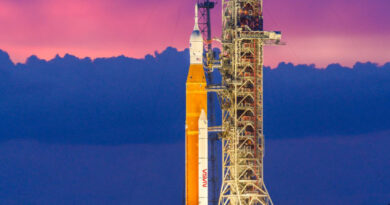
NASA is currently in the final stages of pre-launch operations for Artemis II, the first crewed mission to the Moon in more than 50 years. Following a rollout of the Space Launch System (SLS) rocket to Launch Pad 39B in mid-January 2026, the mission is now targeting a launch as early as February 8, 2026, depending on the successful completion of a critical fueling test.
NASA began a two-day “wet dress rehearsal” on February 2, which involves filling the SLS tanks with over 700,000 gallons of super-cold fuel to simulate a full countdown. This rehearsal was originally scheduled for late January but was pushed back due to freezing temperatures and high winds in Florida. The first primary launch window opens February 8, 2026, with backup windows available in March and April.

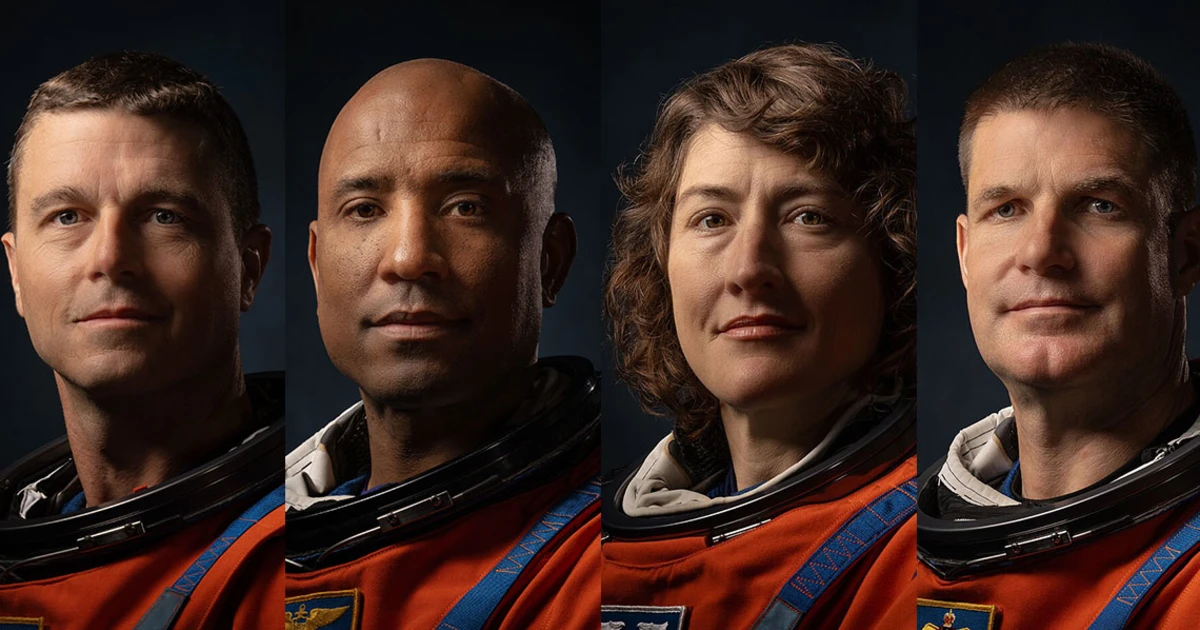
The mission will carry four astronauts who will become the first humans to venture beyond low Earth orbit since the Apollo 17 mission in 1972:
- Commander Reid Wiseman (NASA): A former Naval aviator and Chief of the Astronaut Office.
- Pilot Victor Glover (NASA): He will become the first person of color to leave low Earth orbit.
- Mission Specialist Christina Koch (NASA): The first woman to go to the Moon, she holds the record for the longest single spaceflight by a woman.
- Mission Specialist Jeremy Hansen (CSA): Representing the Canadian Space Agency, he is the first non-American to participate in a lunar mission.
The 10-day journey is a flight test to verify the Orion spacecraft’s life support and navigation systems with humans on board. The spacecraft will launch from Kennedy Space Center atop the SLS, the world’s most powerful operational rocket. The crew will spend the first 24 hours in a high Earth orbit (approximately 40,000 miles away) to test proximity operations and life support. Orion will perform a Trans-Lunar Injection (TLI) to swing around the far side of the Moon. At its peak, the crew will be roughly 5,523 miles (8,889 km) above the lunar surface. The trajectory will take the crew farther from Earth than any previous human mission, surpassing the record set by Apollo 13. Utilizing a “free-return” trajectory, the Moon’s gravity will naturally pull the craft back toward Earth for a high-speed reentry and splashdown in the Pacific Ocean.
Source: NASA

- Your Ultimate Guide to the June Sky Events - May 23, 2026
- Ripples in spacetime and how LIGO proved Einstein right - May 20, 2026
- Hubble Observes A Rare Transitional Galaxy - May 19, 2026