Snow Moon of the Year
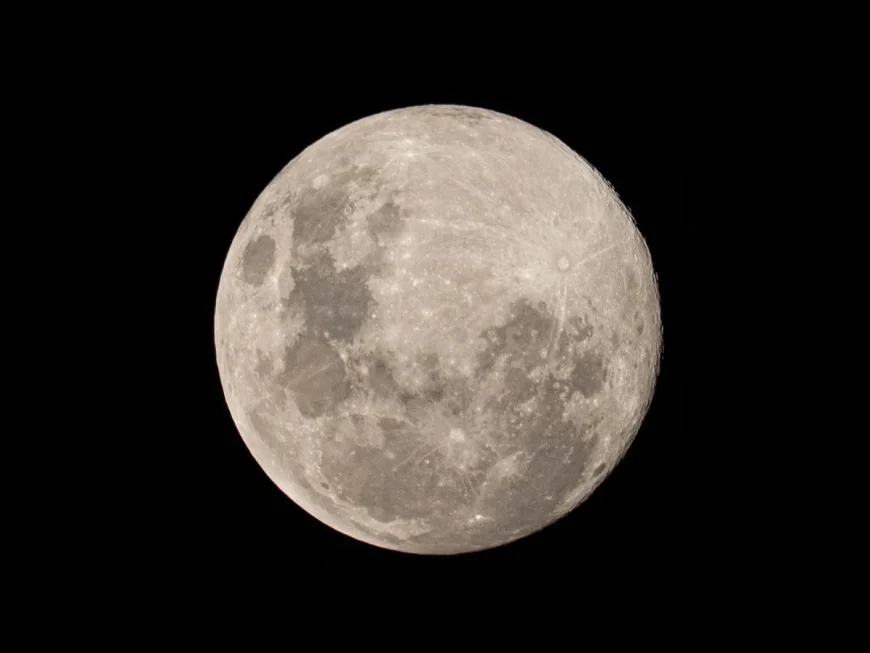
On Sunday, February 1, 2026, the Full Snow Moon rises at the heart of winter, peaking at 5:09 p.m. EST. This celestial event is more than a scenic view; it is a vital marker of seasonal survival and a precursor to a rare upcoming eclipse.
Astronomically, the Snow Moon often appears sharper than others because cold winter air holds less haze and moisture. In 2026, the moon sits in the constellation Cancer (the Crab), appearing next to the brilliant planet Jupiter. This full moon serves as a countdown to March 3, 2026, when the next full moon (the Worm Moon) will undergo a total lunar eclipse, the only one of the year. This “Blood Moon” will be visible across North America for 58 minutes. The snow moon is also called the Hunger Moon or Famine Moon by many tribes, including the Cherokee and Dakota. February was historically the hardest month to hunt or gather food due to deep snow and frozen ground. The Ojibwe and Tlingit call it the Bear Moon, as bear cubs are typically born during this time. Other names include the Eagle Moon (Cree) and Raccoon Moon (Dakota).
Observation Tips
View the moon precisely as it rises over the eastern horizon. A psychological effect called the “Moon Illusion” will make it appear much larger and more golden than when it is high in the sky. The silver light reflecting off snow-covered ground creates high-contrast shadows, ideal for night photography.
Image: EL-balad

- Your Ultimate Guide to the June Sky Events - May 23, 2026
- Ripples in spacetime and how LIGO proved Einstein right - May 20, 2026
- Hubble Observes A Rare Transitional Galaxy - May 19, 2026