Dancing Lights in the Sky
Have you ever gazed up at the night sky, mesmerized by the tiny, flickering lights above, and wondered what secrets they hold?
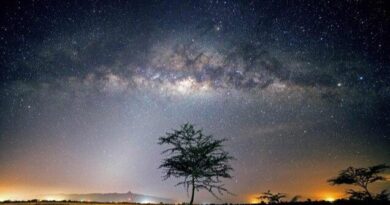
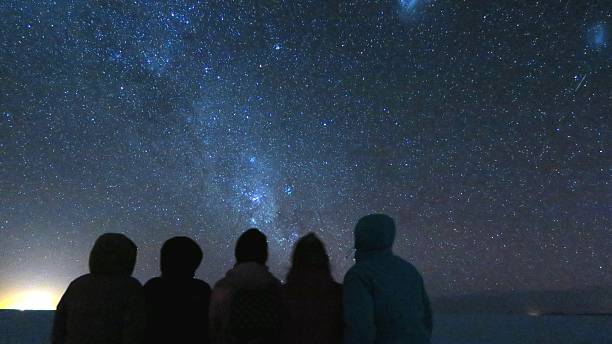
One quiet evening, I stood on the rooftop of our house, gazing into the vast sky. The wind whispered past my ears as I admired the endless darkness scattered with shining stars. In moments like this, I feel grateful to live in a place where the sky stays clear for months.
As I stared upward, it felt as if every tiny light was alive, moving, breathing, telling a story far beyond my imagination.
I was sitting beside my younger brother when he pointed at a distant airplane crossing the sky. It looked so small, so tiny that it could almost disappear between my fingers when I tried to trace it. In that moment, I realized something fascinating.
Airplanes, which seem enormous and powerful when we stand next to them, appear unbelievably small from far away. And yet, even as my eyes followed both the stars and the airplane, a question formed in my mind.
If an airplane looks small from a distance but appears larger as we get closer, then what about the stars?
They appear even smaller than airplanes, yet they are located millions of kilometers away. That thought amazed me. How large must those stars truly be?
That simple curiosity became the beginning of something bigger.
I began my journey to understand the stars. I went to our school library, turning pages, reading books, and searching for answers to the questions filling my mind.
How far away are the stars?
What kind of energy do they produce?
How can their light travel such vast distances to reach us?
How large are they? What shapes do they have?
What are they made of?
How are they created?
What exactly is a star?
And then, even more curious questions followed:
Is it possible to land on a star, as we did on the moon?
Could there be any form of life on them?
Who first discovered and tried to understand these mysterious lights in the sky?
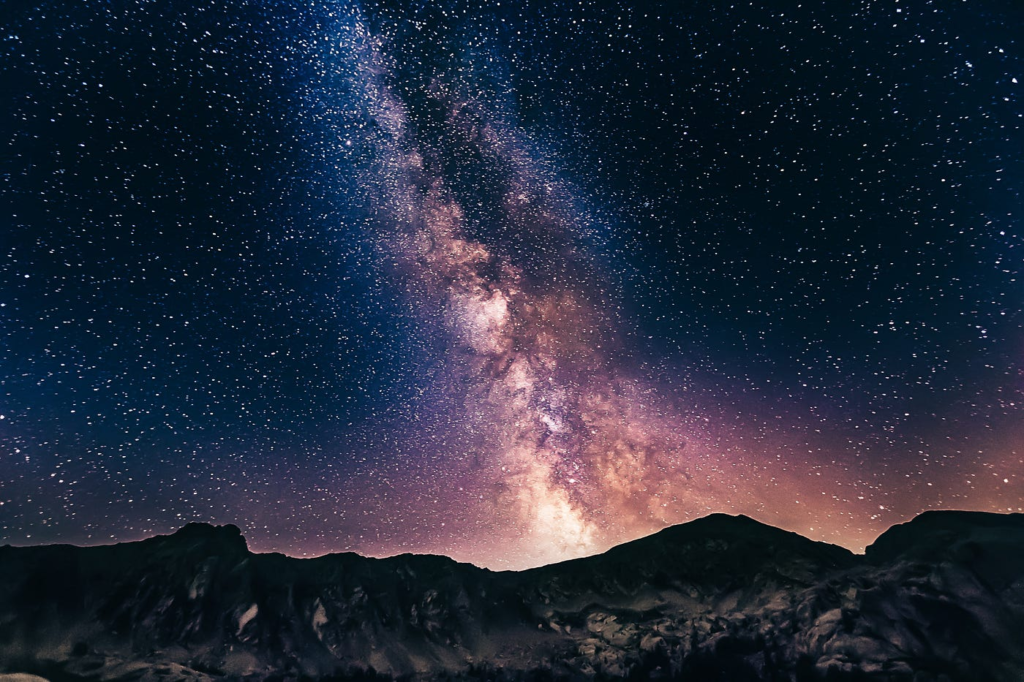
The more I asked, the more I realized that the night sky is not just something to look at, it is something to explore, to question, and to understand.
Those tiny lights are not small at all. They are powerful and massive.
And perhaps, every time we look up, we are not just seeing the stars…
We are looking at the beginning of countless stories, including our own.
Stars emit energy that can be utilized to travel distances in space. This energy is primarily in the form of electromagnetic radiation (light and heat), which carries momentum and can be used to propel spacecraft, alongside the particles emitted in stellar winds.
Stars emit immense amounts of electromagnetic radiation. Although photons (light particles) have no mass, they possess momentum. When starlight hits a reflective surface, the photons transfer their momentum to it, creating a small pushing force. Stars constantly eject charged particles (protons, electrons, helium nuclei) into space, known as solar wind or stellar wind. These particles move at high speeds and can be captured or reflected, thereby creating pressure. While not directly propelling a ship, the thermal energy of stars allows for photo-gravitational assists. By passing closely around a star, a spacecraft can leverage the star’s immense gravity to change direction and boost speed, using the thermal energy to aid in trajectory planning.
Star’s Size
Stars vary wildly in size, from small, dense neutron stars roughly the size of a city to red super-giants over 1,700 times the radius of the sun. While the sun is a moderate, average-sized star, others can be so large that if placed at the center of our solar system, they would extend beyond the orbit of Jupiter.
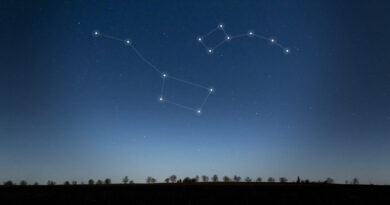
Stars are massive, luminous spheres of plasma held together by their own gravity, not the pointy, star-shaped polygons often depicted. While essentially spherical, fast-spinning stars can be flattened into a slightly oblate spheroid shape (similar to a tangerine) rather than a perfect sphere.
Stellar Rotation
Stellar rotation is the angular motion of a star about its axis. The rate of rotation can be measured from the spectrum of the star or by timing the movements of active features on the surface. This illustration shows the oblate appearance of the star Achernar caused by rapid rotation.
Based on archaeological records, the earliest known systematic observations and charting of the stars were conducted by the Babylonian astronomers in Mesopotamia (modern-day Iraq) around 1000 BCE, though they built upon earlier Sumerian traditions from the Early Bronze Age. While prehistoric humans had likely observed the sky for tens of thousands of years, the Babylonians were the first to record the movements of stars and planets into comprehensive star catalogs.
Apart from the Sun, the closest star to Earth is Proxima Centauri, located approximately 4.24 to 4.25 light-years away. This distance is equal to about 25 trillion miles (40 trillion kilometers). It takes light over four years to travel from this star to Earth, making it incredibly distant from our solar system.
Besides that, the closest star to Earth is the Sun, which is about 93 million miles (149.6 million kilometers) away. Another nearby star is Barnard’s Star, located about 5.9 light-years away. There are an estimated 1 sextillion to 1 septillion stars in the observable universe (that is, a 1 followed by 21 to 24 zeros). This estimate comes from multiplying the roughly 2 trillion galaxies by the average number of stars in each galaxy. In fact, there are more stars in the universe than all the grains of sand on Earth. Knowing this highlights the vastness of the universe and our place within it.
In the universe, there is no clear end; it is often described as infinite, meaning it has no boundaries. Stars are luminous, roughly spherical balls of plasma held together by gravity. Although we often draw them as pointed shapes, real stars are spherical, though rapid rotation can make them slightly flattened at the poles.
This leads to an interesting question: why do we draw stars with points? The answer lies like light. Light behaves as a wave, and when it passes through small openings or around objects, it bends and spreads out. These waves can interfere with each other, creating patterns that appear pointed. This is why stars are often depicted with points in drawings, even though they are actually spherical.
Once, a friend told me that stars were made of “snow.” I remember wondering how it might have never melted. But as I grew older, I discovered the truth: stars are actually made mostly of hydrogen and helium, with tiny traces of heavier elements like oxygen, carbon, and nitrogen.
Stars are born within vast clouds of interstellar gas and dust, known as nebulae. Over time, gravity pulls this material inward, causing it to collapse. As the core becomes hotter and denser, it eventually reaches a point where nuclear fusion begins. This process takes millions of years, transforming a cold, dark cloud into a brilliant, light-producing star.
Stars are more than just distant points of light; they are powerful cosmic furnaces. Inside them, heavier elements such as carbon, oxygen, and iron are formed, elements that are essential for the creation of planets and even life itself. They provide light, heat, and energy, supporting ecosystems and shaping the universe as we know it. Our Sun, in particular, is not only vital for life on Earth but also deeply woven into human culture and mythology.
Stars are not solid surfaces upon which one could ever hope to land. Instead, they are vast, raging spheres of superheated plasma, gas so intensely energized that it radiates brilliant light. Their immense gravity and scorching temperatures make them utterly unreachable, and surviving near one is beyond imagination.
Since the dawn of humanity, people have looked up at the night sky in awe, captivated by these glowing wonders. Who first paused to truly notice them? What stories were born to explain their quiet beauty? Even now, those same questions echo in our minds, linking us to generations long before us.
The stars are not only distant, but they are separated by incomprehensible stretches of space. In our galaxy, the average distance between stars is about five light-years, roughly 30 trillion miles (or 47 trillion kilometers). Such distances are nearly impossible to grasp, yet they reveal the breathtaking vastness of the universe we inhabit.
And still, despite all we have discovered, stars continue to ignite our curiosity. Questions flicker through our thoughts, drawing us toward the unknown. Rather than silencing them, we should chase those questions, explore them, navigate them, and seek their answers. In the end, it is our curiosity that drives us to understand not only the universe around us, but also the deeper meaning of ourselves.

- Dancing Lights in the Sky - April 25, 2026