The Nancy Roman Grace Telescope
Last Updated on March 3, 2026 by Tsiyon Hone
In 1996, astronomer Alan Dressler chaired a committee of 18 members that recommended NASA a space telescope to observe the universe in infrared light, enabling astronomers to see through clouds of dust and gas and to extend their observations deeper into space and further back in time. The James Webb Space Telescope was suggested. Named after James E. Webbs, an administrator of NASA from 1961 to 1968, the telescope has been able to make some of the most groundbreaking discoveries in the field of astronomy. It has revealed exoplanet atmospheres, captured stunning galaxy formations, detected early universe structures, and uncovered hidden star nurseries, transforming our understanding of cosmic origins and evolution. However, our curiosity has prompted us to harness the power of technology to even further explore the mysteries of the universe, and the development of the Nancy Roman Grace Telescope will pave the way.
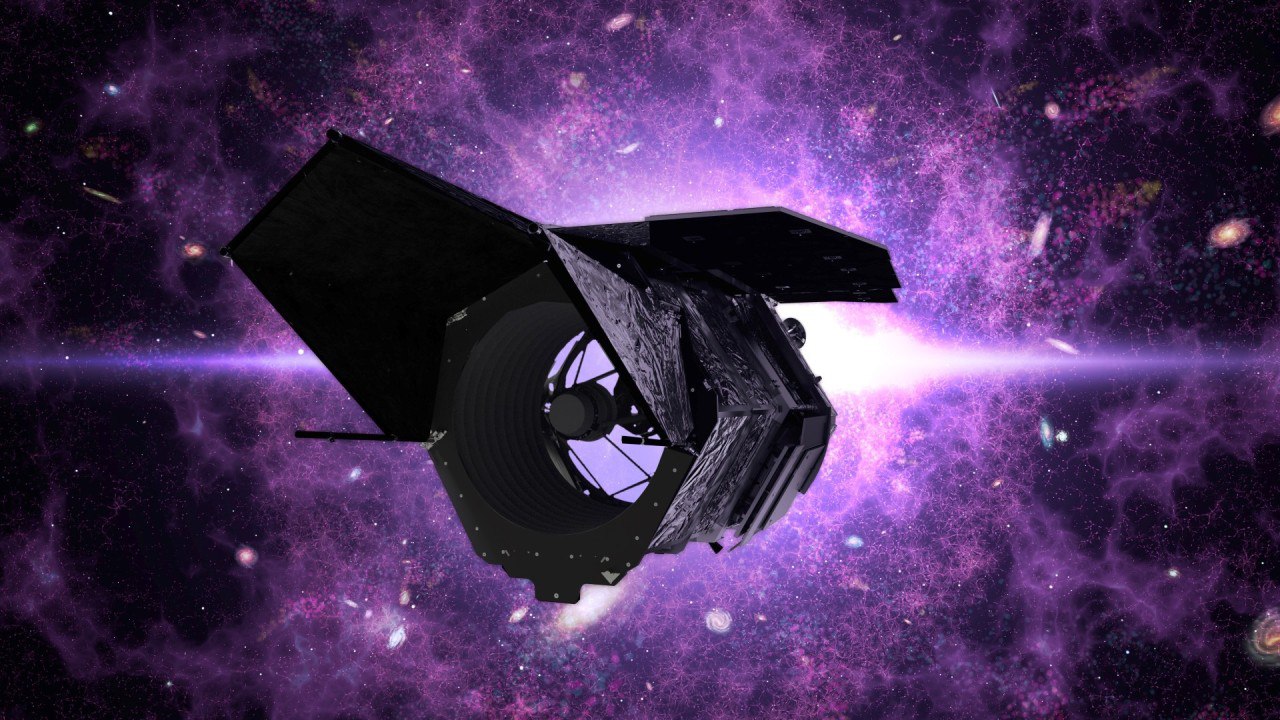
Originally known as the WFIRST (Wide Field Infrared Survey Telescope), the 2.4-meter-wide NASA observatory Telescope is a NASA observatory designed to tackle some of the biggest cosmic mysteries. Roman is equipped with two instruments: the Wide Field Instrument for large-scale surveys and the Coronagraph Instrument for directly imaging exoplanets.
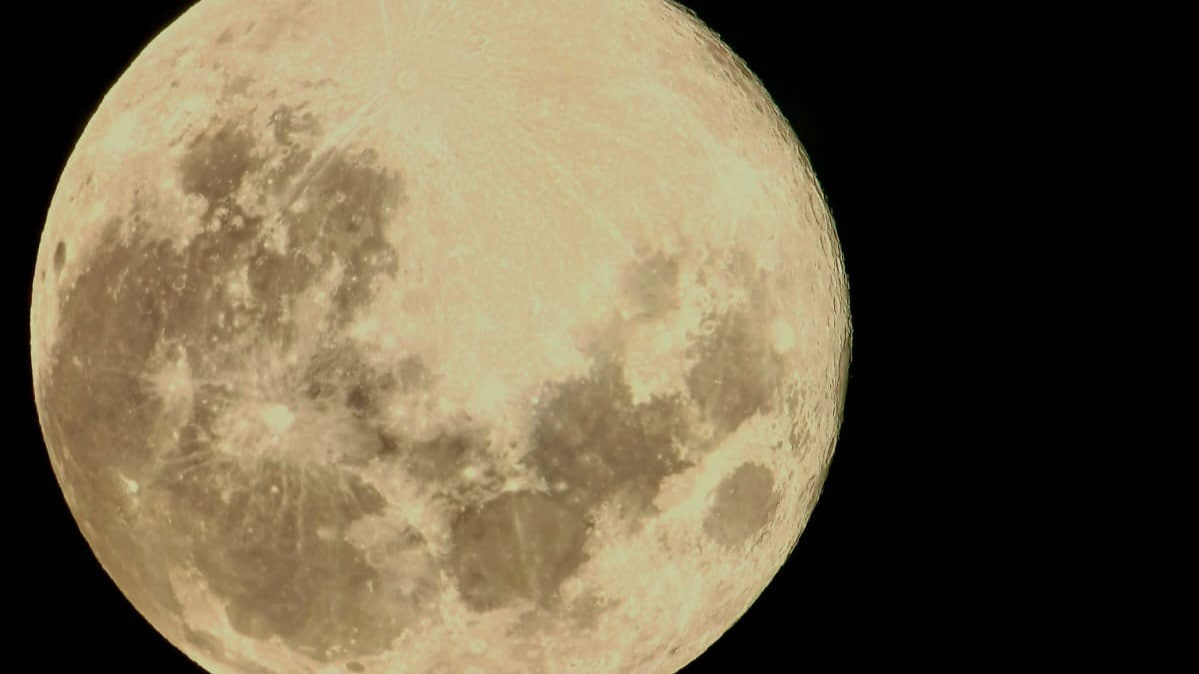
With its wide-field instrument, the telescope covers an area of the sky ranging from 29.4 to 33.5 arc minutes, which is the apparent size of the full moon. As a result, Roman’s field of vision is 200 times larger than that of the Wide Field Camera on Hubble. It is predicted to picture more than 50 times the sky that Hubble imaged in its first 30 years of observations within its first five years of operation. Roman is also expected to survey the sky up to 1,000 times faster than Hubble while retaining comparable sensitivity and resolution in the infrared band. It will be able to survey across space and probe deep into dusty regions, such as the Milky Way galaxy, to help close gaps in our understanding of the cosmos. To directly view exoplanets and planet-forming disks, the mission uses 18 detectors to convert starlight into electrical signals that will be processed into high-resolution images.
The telescope will observe the universe in infrared light because light from distant galaxies stretches to infrared wavelengths as it travels vast distances. Earth’s atmosphere hinders such observations, but its location in space and large mirror allow it to peer deeper than ever before, as its positioned on L2.
Roman also plans to demonstrate direct imaging technology with its Coronagraph Instrument, a set of masks, prisms, detectors, and even self-flexing mirrors designed to expose the planets orbiting distant stars by blocking out their brilliance. Its ability to directly catch light from massive, gaseous exoplanets as well as from dust and gas disks encircling other stars will open the door for new astronomical discoveries. The Coronagraph’s two movable mirrors are essential parts. Thousands of actuators, acting like pistons, alter the curvature of the mirrors in real time as light arrives at the telescope from an exoplanet that has travelled tens of thousands of light-years. The telescope’s optics are adjusted for minute imperfections and variations by the flexing of these “deformable mirrors.”
“Changes on the mirrors’ surfaces are so precise they can compensate for errors smaller than the width of a strand of DNA.” According to the Ronan Grace NASA article.
One of the main awaited tasks, for the Nancy Grace The Roman Space Telescope is to shed light on the mysteries of dark matter and dark energy. Roman’s Wide Field Instrument will capture vast images of the cosmos, allowing scientists to map galaxy distribution and dark matter distribution, providing insights into dark energy nature. The instrument will also observe Type Ia supernovae, measuring redshift and brightness, to create a detailed history of the universe’s expansion and refine dark energy’s behaviour over time. Combining Roman’s data with Euclid’s observations will provide a more comprehensive understanding of the universe’s expansion history and dark energy role.
The Nancy Grace Roman Space Telescope is also expected to spearhead the study of exoplanets. To learn how we currently detect exoplanets you can look at Noela’s presentation on Exoplanets detection. Its wide-field imaging capability will detect exoplanets through gravitational microlensing. This technique can reveal Earth-sized or smaller planets and distant galaxy regions, expanding the current catalogue and providing a broader understanding of their distribution, sizes, and orbital characteristics. The coronagraph instrument will block starlight, allowing for the direct imaging of surrounding exoplanets, improving the study of atmospheres, including habitable zones, and detecting atmospheric molecules like water vapour, carbon dioxide, and methane.
Our capacity to investigate and comprehend the cosmos will advance with the launch of the Nancy Grace Roman Space Telescope. Fundamental topics in astrophysics and cosmology will be investigated by mapping cosmic structures, researching supernovae, scanning for exo-planets, and looking into dark energy and dark matter. Scientists around the world are eagerly awaiting its launch, anticipating that it will open a new era in space exploration and deepen our understanding of the universe in ways we can only begin to imagine.
References
https://www.ipac.caltech.edu/news/prepping-for-data-from-the-nancy-grace-roman-space-telescope
Noela’s Presentation on Exoplanet Detection

- Cultural Perspective of the Moon in East Africa - January 8, 2026
- Reframing Cultural Astronomy in Africa - September 25, 2025
- Enigmatic Explosions Redefining Our Understanding of Cosmic Phenomena - October 14, 2024