The Alignment of Planets on Feb 28, 2026
If you’ve heard about the February “planet parade,” you’re probably wondering how to actually see it and the good news is, you don’t need a telescope to enjoy it. This is one of the most exciting sky events for beginners and astronomy lovers alike.
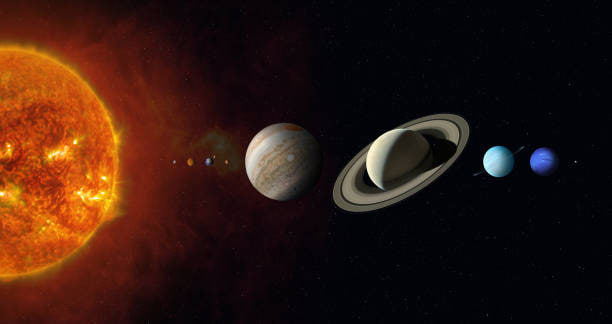
First, what is a planet parade? It’s when multiple planets appear in the sky at the same time, lined up along the ecliptic (the path the Sun and planets follow). They won’t form a perfect straight line, but visually, it feels like a cosmic lineup across the sky, and that alone makes it magical to observe.
What Happens During the Planetary Alignment on February 28?
On Feb 28, 2026, six planets are above the horizon on the same evening.

This parade will include Mercury, Venus, Saturn, Jupiter, Uranus, and Neptune. Now, here’s how to see it properly.
Start by choosing the right time. The best moment to watch a planet parade is usually just after sunset or before sunrise, depending on the month’s visibility. In February evenings, several bright planets can be spotted shortly after the Sun goes down, when the sky is dark enough but the planets are still above the horizon. This short window is the golden hour for observers.
Next, find a dark location. Light pollution is the biggest enemy of skywatching. Try to observe from a rooftop, an open field, or any place away from bright city lights. Even in a city like Addis Ababa, you can still see the brightest planets if you pick a spot with a clear western and southern horizon.
Then, let your eyes adapt to the darkness. This is very important. Give your eyes about 15–20 minutes to adjust. Avoid looking at your phone too often, because bright screens reset your night vision and make faint objects harder to see.
Now comes the exciting part: spotting the planets. Unlike stars, planets do not twinkle as much and usually shine with a steady, bright glow. Venus will often be the brightest and easiest to see, looking like a brilliant white “star” near the horizon. Jupiter appears very bright and slightly golden, while Mars may have a noticeable reddish tint. Saturn is dimmer but still visible under darker skies.
You don’t actually need equipment, but binoculars make the experience dramatically better. With simple binoculars, Jupiter’s moons may become visible as tiny points of light, and Saturn will appear brighter and more defined. A telescope, of course, turns the experience into something unforgettable, revealing rings, cloud bands, and planetary details.
Use a sky map app for accuracy. Apps like Stellarium or Sky Guide can show you exactly where each planet is in real time. Just point your phone at the sky, and it will guide you like a digital star map. This removes the guesswork and makes the hunt thrilling instead of confusing. Weather also matters. Clear skies are essential. Even thin clouds can hide dimmer planets, so check the forecast before planning your observation night.
One more scientific tip: look along the ecliptic line. The planets always appear along the same general path the Sun travels across the sky. If you trace the path where the Sun set, and follow that arc upward, you are essentially scanning the highway of the planets.

- Your Ultimate Guide to the June Sky Events - May 23, 2026
- Ripples in spacetime and how LIGO proved Einstein right - May 20, 2026
- Hubble Observes A Rare Transitional Galaxy - May 19, 2026