What Is Astronomy
Astronomy is the scientific study of celestial objects, cosmic phenomena, and the physical processes that govern the universe beyond Earth’s atmosphere. It is a fundamental branch of science that combines physics, mathematics, chemistry, and observational techniques to understand the origin, structure, evolution, and dynamics of the cosmos. Unlike astrology, which is based on symbolic interpretations, astronomy relies on empirical evidence, data analysis, and the scientific method.

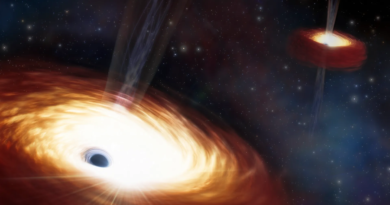
From a scientific perspective, astronomy investigates a wide range of objects, including stars, planets, galaxies, nebulae, black holes, and cosmic radiation. These objects are studied across the electromagnetic spectrum, from radio waves to gamma rays, because different wavelengths reveal different physical properties. For example, infrared observations can penetrate dust clouds to reveal star formation, while X-ray astronomy detects high-energy processes such as accretion around black holes.
Astronomy is closely linked with astrophysics, which applies the laws of physics to explain how celestial bodies form and behave. Key physical principles such as gravity, nuclear fusion, thermodynamics, and electromagnetism are essential in understanding cosmic systems. For instance, stars generate energy through nuclear fusion in their cores, converting hydrogen into helium and releasing enormous amounts of energy in the form of radiation. This process determines a star’s luminosity, temperature, and lifespan.
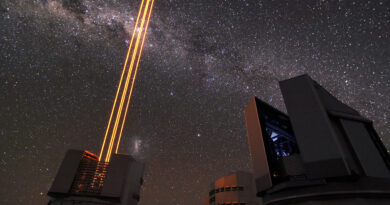
One of the core methods in astronomy is observational data collection. Modern astronomers use ground-based telescopes, space telescopes, spectrometers, and radio arrays to gather precise measurements of light, motion, and chemical composition. Spectroscopy, in particular, allows scientists to analyze the light emitted or absorbed by celestial objects to determine their temperature, velocity, elemental composition, and redshift. Redshift measurements are especially important in cosmology, as they provide evidence for the expansion of the universe.
Astronomy is divided into multiple scientific subfields. Planetary science focuses on the formation and evolution of planets and planetary systems, including exoplanets orbiting distant stars. Stellar astronomy examines the life cycles of stars, from their formation in molecular clouds to their final stages as white dwarfs, neutron stars, or black holes. Galactic astronomy studies the structure and dynamics of galaxies, while cosmology investigates the large-scale structure of the universe, dark matter, and dark energy.
The scale of astronomical study is vast, ranging from objects within our solar system to galaxies billions of light-years away. Because light takes time to travel, observing distant objects allows astronomers to study the universe’s past. For example, when we observe a galaxy located millions of light-years away, we are effectively seeing it as it existed millions of years ago. This makes astronomy a unique time-based science that reconstructs cosmic history through observation.
Technological advancements have significantly enhanced astronomical research. Space-based observatories eliminate atmospheric distortion, enabling high-resolution imaging and precise measurements. Additionally, computational modeling and simulations allow scientists to test theoretical predictions about galaxy formation, stellar evolution, and cosmic expansion. Large datasets from observatories are now analyzed using advanced algorithms and data science techniques, improving the accuracy of astronomical discoveries.
Astronomy also contributes to our understanding of fundamental physics. Observations of gravitational waves, cosmic microwave background radiation, and high-energy particles provide insights into the early universe and extreme physical conditions that cannot be replicated on Earth. These studies help refine theories about spacetime, gravity, and the origins of the universe.
What do we see in the night sky?
Looking at the night sky is essentially looking back in time. Light from celestial objects takes time to travel through space, so when we observe them, we are seeing them as they were in the past. The night sky contains objects from our Solar System, our Milky Way Galaxy, and even distant galaxies billions of light-years away.

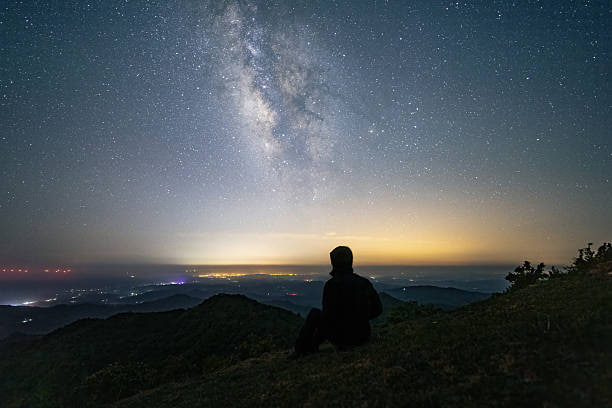
Under dark skies, we can observe a faint luminous band across the sky known as the Milky Way. This is the disk of our home galaxy seen from inside it. The glow comes from billions of unresolved stars, along with interstellar dust and gas.
Within the Milky Way, telescopes reveal many nebulae, which are clouds of gas and dust. These include:
- Emission nebulae – glowing regions where new stars are forming
- Reflection nebulae – clouds reflecting nearby starlight
- Planetary nebulae – shells of gas expelled by dying stars
- Supernova remnants – expanding debris from exploded stars
Solar System Objects
The Moon
The Moon is the brightest natural object in the night sky. Its appearance changes through phases as its position relative to Earth and the Sun changes. Through binoculars or small telescopes, we can observe craters, maria (ancient lava plains), mountain ranges, and shadows along the lunar terminator.
The Moon is Earth’s only natural satellite and the most prominent object in the night sky. It formed about 4.5 billion years ago, most likely after a Mars-sized body collided with the early Earth, ejecting material that later coalesced into the Moon. Because the Moon is tidally locked to Earth, we always see the same side of its surface. Its landscape is dominated by impact craters, dark basaltic plains called maria, and bright highlands, all shaped by ancient volcanic activity and meteorite impacts. The Moon does not produce its own light; instead, it reflects sunlight, which is why it goes through different phases as it orbits Earth. Its gravitational pull also plays a crucial role in creating ocean tides and stabilizing Earth’s axial tilt, which helps regulate our planet’s climate over long timescales.
Planets
Several planets are visible to the naked eye. Unlike stars, planets usually shine with steady light and move slowly relative to the background stars along a path called the ecliptic.
Planets are some of the brightest objects visible in the night sky. Unlike stars, which produce their own light through nuclear fusion, planets reflect sunlight, making them shine steadily rather than twinkling like stars.
Asteroids and Comets
Occasionally, observers can detect asteroids as faint moving points of light against the star background. Comets appear as fuzzy objects with glowing comas and sometimes long tails formed as solar radiation vaporizes their icy surfaces.
Stars and Stellar Systems
Stars are massive spheres of plasma powered by nuclear fusion, primarily converting hydrogen into helium in their cores. Their colors reveal their surface temperatures:
- Blue stars – hottest
- White/yellow stars – intermediate
- Red stars – cooler
Stars often appear grouped into constellations, patterns used historically for navigation and storytelling. Physically related groups of stars form star clusters, which can be:
- Open clusters – young stars loosely bound together
- Globular clusters – dense, ancient spherical systems containing hundreds of thousands of stars
Meteors and Meteor Showers
Meteors are brief streaks of light produced when small fragments of rock or metal, called meteoroids, enter Earth’s atmosphere at high speeds. Friction with atmospheric gases heats the object, causing it to glow and sometimes vaporize completely. These visible flashes are commonly known as “shooting stars.” When larger fragments survive their passage through the atmosphere and reach the ground, they are called meteorites. Periodic meteor showers occur when Earth passes through debris streams left behind by comets.
Artificial Satellites
Human-made objects also cross the night sky. Satellites and the International Space Station appear as steadily moving points of light. Unlike meteors, they move slowly and do not produce trails. Artificial satellites are human-made objects placed into orbit around Earth for scientific, technological, or communication purposes. They orbit the planet due to the balance between their forward velocity and Earth’s gravitational pull. Many satellites can be seen from the ground as slow-moving points of light crossing the night sky, especially shortly after sunset or before sunrise when they reflect sunlight. Examples include weather satellites, communication satellites, and the International Space Station (ISS), which is often the brightest artificial object visible from Earth.
Beyond the Milky Way
With telescopes, astronomers can observe distant galaxies, each containing billions of stars. Some are spiral galaxies like the Milky Way, while others are elliptical or irregular in shape. Observing these galaxies allows astronomers to study the large-scale structure and evolution of the universe.
In essence, astronomy is a multidisciplinary science that seeks to explain the physical nature of the universe through systematic observation and theoretical modeling. By studying cosmic structures and processes, astronomy not only expands scientific knowledge but also deepens our understanding of the laws that govern space, time, and matter on the largest possible scales.

- Your Ultimate Guide to the June Sky Events - May 23, 2026
- Ripples in spacetime and how LIGO proved Einstein right - May 20, 2026
- Hubble Observes A Rare Transitional Galaxy - May 19, 2026